Buyer’s Guide to the Best Glucosamine for Dogs
The-Hunting-Dog is supported by its audience. As an Amazon Associate, we earn from qualifying purchases.
When your dog hesitates getting up or slows down on familiar walks, choosing a joint supplement can feel confusing. These five options make it easier to compare formats, ingredient amounts, and daily routines before discussing a choice with your veterinarian.

These are formulation and administration comparisons. Joint supplements are not proven replacements for arthritis pain treatment; the evidence and safety sections below explain the limits.
Five product reviews
1. Cosequin Plus MSM Chewable Tablets
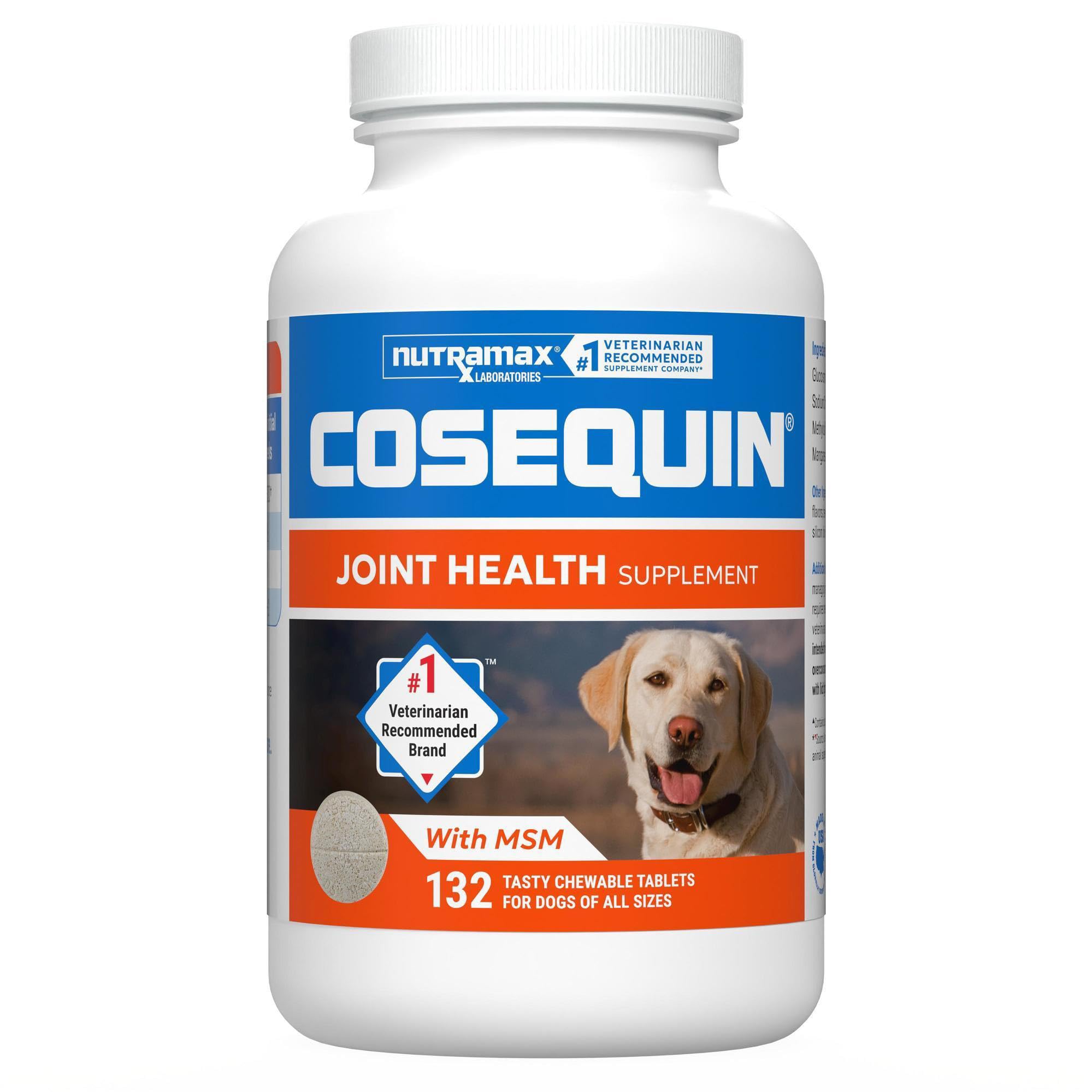
132 chewable tablets
Cosequin is the tablet option for an owner who wants a clearly countable serving rather than measuring a liquid. This is the 132-tablet Plus MSM version; the brand's soft chews are a different product. The formula combines glucosamine hydrochloride, sodium chondroitin sulfate and MSM. It is a practical candidate to discuss when your dog accepts tablets and your veterinarian wants the administration recorded consistently.
The manufacturer's directions use weight bands and distinguish an initial four-to-six-week period from maintenance. That difference matters when judging how long the bottle will last. For a dog in the 31–60 lb band, the labeled initial amount is two tablets daily, compared with one daily at maintenance. A full bottle therefore contains 66 days at the initial amount or 132 at that maintenance amount; a course that changes amounts will last somewhere between those examples.
Clear instructions help with administration, but they do not establish an individual dog's response. Keep a record of comfort and mobility, and have persistent stiffness assessed rather than increasing the amount on your own.
Pros
- Countable tablets and a defined 132-count pack make supply planning straightforward.
- Separate initial and maintenance instructions cover four weight bands.
Cons
- The initial amount uses the bottle faster; this format also requires a dog who will accept tablets.
2. Plano Paws ActivTreats Hip & Joint

Chicken flavor · 120 soft chews
Plano Paws ActivTreats suits an owner who prefers a soft chew and wants a formula that also includes turmeric and yucca. The chicken-flavored 120-count version is the one compared here. Its ingredient panel gives quantities per two chews: 625 mg glucosamine hydrochloride, 325 mg MSM and 210 mg chondroitin sulfate. Read those as a two-chew analysis, not as the contents of one piece.
The manufacturer's feeding chart lists two chews daily for dogs up to 25 lb, three for 26–75 lb and four for 76 lb or more. On that schedule, the container provides 60, 40 or 30 days respectively. Those calculations make the larger-dog commitment much clearer than the front-of-pack count. Use the schedule only if your veterinarian agrees that the product fits your dog's care plan.
The formula includes shellfish-derived glucosamine, porcine chondroitin and egg shell meal. A soft texture does not make it suitable for every dietary restriction. Its broader blend may also be less convenient if the veterinary team wants to evaluate a simpler ingredient combination.
Pros
- The manufacturer discloses quantities for the active blend rather than listing ingredient names alone.
- The soft-chew format and three weight bands make daily administration easy to plan.
Cons
- Shellfish, porcine and egg ingredients limit suitability for some restricted diets.
- The 120-count pack lasts only 30 days at the largest labeled daily amount.
3. Liquid Health Pets K9 Glucosamine
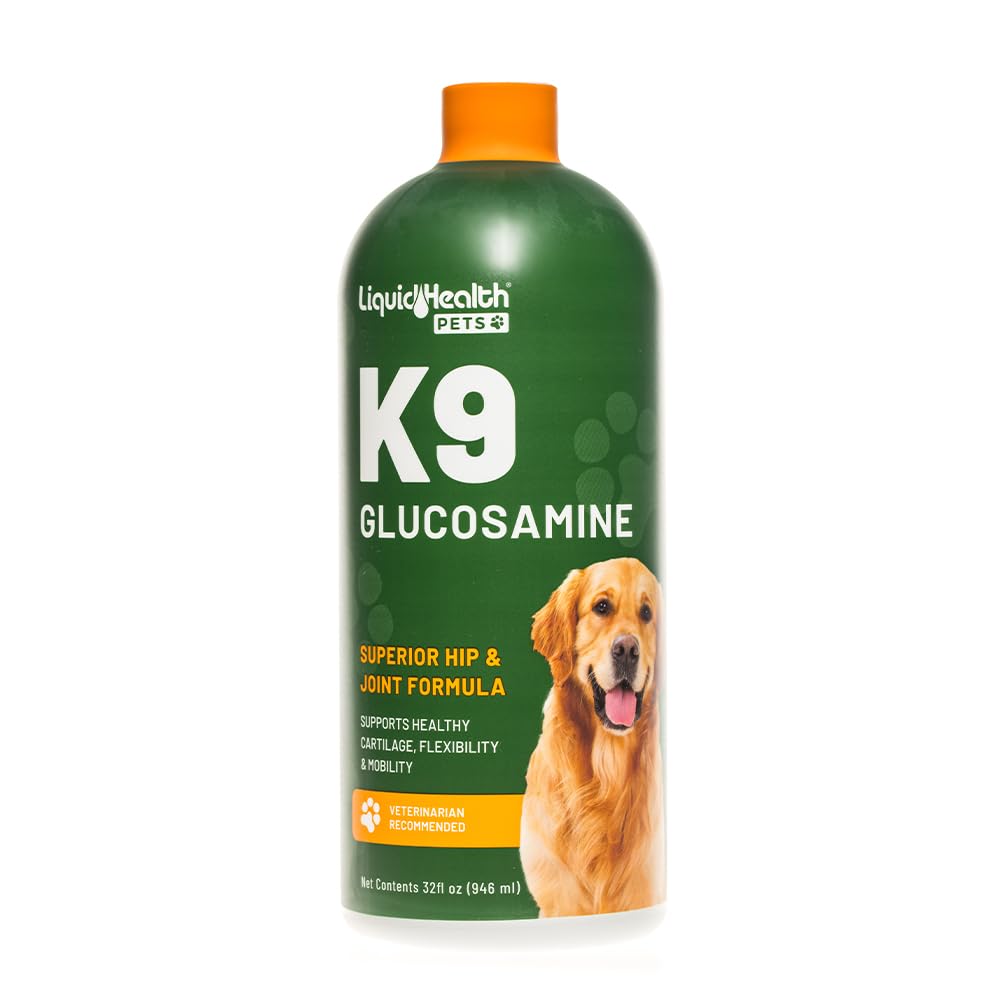
Original formula · 32 fl oz bottle
Liquid Health is the option for a household that prefers adding a measured liquid to food. This 32-fluid-ounce original K9 formula is distinct from the brand's Level 5000 and vegetarian formulas. Its analysis is stated per fluid ounce: 1,600 mg glucosamine hydrochloride, 1,200 mg chondroitin sulfate and 1,000 mg MSM, with manganese and hyaluronic acid. A fluid ounce is the analysis basis, not a universal daily serving.
The manufacturer directs owners to shake the bottle and refrigerate it after opening. A measuring spoon or suitable oral measuring device is more dependable than pouring by eye. For example, the published schedule for 25–49 lb dogs totals three teaspoons daily, divided between morning and evening. Ask your veterinarian whether that schedule is appropriate before using it. Record the volume given so that another family member does not repeat the serving.
The practical advantage is avoiding a solid tablet or chew. The tradeoff is measuring and cold storage. The formula contains shellfish-derived glucosamine and beef and/or porcine chondroitin, and the liquid format does not prove faster or better relief from arthritis pain.
Pros
- A measured liquid offers an alternative for dogs who will not accept tablets.
- The published analysis separates fluid-ounce concentrations from weight-based feeding volumes.
Cons
- Requires shaking, accurate volume measurement and refrigeration after opening.
- Contains animal-derived ingredients, including shellfish.
4. NaturVet Glucosamine DS Plus

Level 2 / Moderate Joint Care · 120 soft chews
NaturVet's Moderate Joint Care soft chews, formerly named Glucosamine DS Plus, offer another soft format in a 120-count container. The formula provides 500 mg glucosamine hydrochloride, 500 mg MSM and 60 mg chondroitin sulfate per two chews. That balance differs from Plano Paws: comparing the same two-chew analysis basis reveals more MSM and less chondroitin here. Neither difference by itself proves better results.
The label covers dogs and cats over 12 weeks, which may simplify storage in a mixed-pet household, although each animal still needs an appropriate individual plan. Maintenance directions range from one chew for pets up to 10 lb to four for those 80 lb and over. The introductory directions double the daily amount for the first three weeks. At four chews daily, 120 pieces represent 30 days; at the doubled amount they represent 15 days.
The active ingredients include shellfish-derived glucosamine and porcine chondroitin. Keep the package out of reach between servings: flavored chews should never be left available for a pet to help themselves. The manufacturer advises stopping administration and consulting a veterinarian if the condition worsens or fails to improve.
Pros
- Published two-chew quantities make the glucosamine, MSM and chondroitin balance easy to compare.
- Labeled for both dogs and cats over 12 weeks, with explicit weight-based maintenance directions.
Cons
- The introductory schedule doubles consumption, substantially shortening the supply.
- Shellfish and porcine ingredients may not fit a restricted diet.
5. VetIQ Hip & Joint Soft Chews
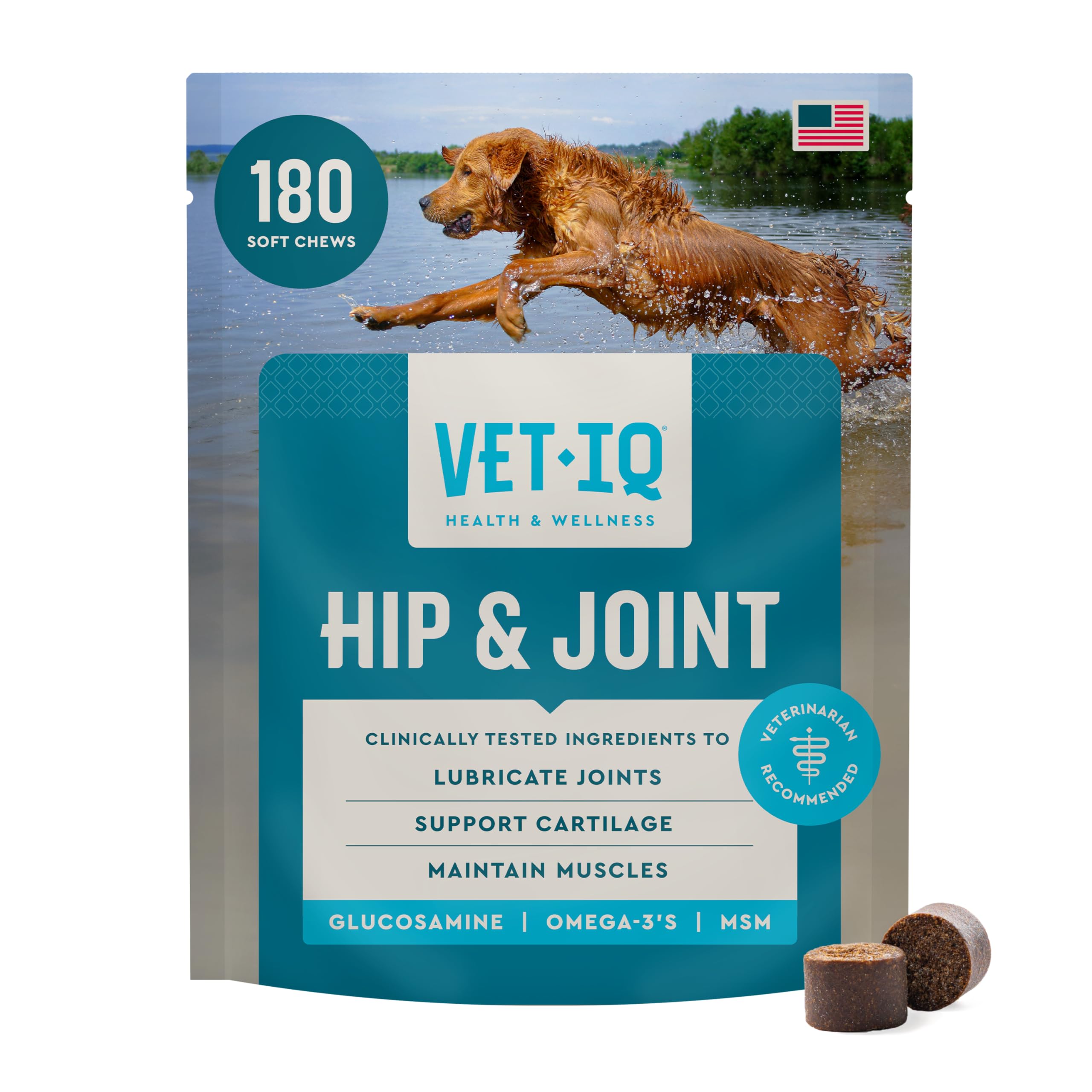
Chicken flavor · 180 soft chews
VetIQ is a chicken-flavored soft-chew option in a larger 180-count pack. The manufacturer's product facts list 600 mg glucosamine hydrochloride and 210 mg MSM per two chews, together with fish oil and krill meal. It is not the same glucosamine-and-chondroitin combination as the other products here. If a veterinary plan calls for a particular ingredient combination, that distinction is more useful than the words 'hip and joint' on the package.
The published daily schedule is one chew every other day for 5–15 lb dogs, one daily for 16–30 lb, two for 31–60 lb, four for 61–100 lb and five above 100 lb. The 180-count supply therefore means 90 days at two daily or 45 at four daily, before any introductory adjustment your veterinarian recommends. The brand states that dogs must weigh at least five pounds to start this product.
Fish and shellfish ingredients are a relevant limitation for dietary sensitivities. The presence of fish oil also does not establish that this product supplies the EPA and DHA amount appropriate for treating a particular dog's condition; that requires a separate veterinary assessment.
Pros
- The 180-count pack gives a longer supply at smaller daily amounts.
- The manufacturer provides a clear weight-based schedule, including an every-other-day band.
Cons
- Not labeled for dogs under 5 lb.
- Fish and shellfish ingredients may not fit restricted diets; it is not a chondroitin formula.

What the evidence says about glucosamine
Glucosamine is an amino sugar associated with components of cartilage. Supplements commonly combine it with chondroitin, MSM or other ingredients. That biological connection does not establish that swallowing a product restores a damaged joint. Osteoarthritis is a complex, progressive condition, and it can affect younger dogs as well as seniors.
A systematic review and meta-analysis of clinical trials found no convincing pain-relieving effect for chondroitin–glucosamine supplements in dogs and cats with osteoarthritis. International COAST guidelines also recorded disagreement among experts about recommending glucosamine. These products should not be presented as proven substitutes for effective pain management, a cure for arthritis, or a way to rebuild lost cartilage.
If your veterinarian suggests a supplement, discuss a specific goal and a reassessment date. Consider the whole care plan, including appropriate body weight, manageable activity, rehabilitation and prescribed treatment where indicated. A more elaborate ingredient list or a higher milligram figure alone does not identify the right choice.
How to compare the five options
Compare the same serving basis
One tablet, two chews and one fluid ounce are different units. Plano Paws and NaturVet publish analyses per two chews; Liquid Health uses a fluid-ounce basis. Before comparing quantities, write the analysis unit alongside each number. Then distinguish that concentration from the manufacturer’s suggested daily amount for your dog’s weight. Do not select a serving by copying another brand’s schedule.
Calculate the supply for your actual routine
Divide the number of pieces in the container by the daily number agreed with your veterinarian. For example, 120 chews given four daily make a 30-day supply. If the directions change after an introductory period, calculate the two stages separately. Compare the cost of the relevant daily amount when you view current prices, rather than judging value by container size.
Choose a format you can administer accurately
A tablet is easy to count, a soft chew can be convenient to offer, and a measured liquid can be mixed with food. None is automatically more effective. A liquid needs accurate measurement and, for the Liquid Health formula here, refrigeration after opening. If food is shared between pets, ensure that the intended dog receives the measured amount instead of adding it to a communal bowl.
Consider the complete ingredient list
Several products contain shellfish-derived glucosamine; chondroitin may come from porcine or bovine material. Flavors and other ingredients can also matter when a dog has dietary restrictions. Bring the exact formula to your veterinarian if your dog follows an elimination diet. A familiar brand name is not enough to establish that a different flavor or format fits the same restrictions.
Signs that deserve a veterinary assessment
Difficulty rising, a shorter stride, reluctance to walk, changes in posture and avoiding familiar activities can be signs of discomfort. They do not diagnose a glucosamine deficiency. Arrange an examination to identify the problem rather than assuming that stiffness is an unavoidable part of getting older. Sudden severe pain, an inability to stand or refusal to bear weight needs prompt veterinary attention.
Home observations can help the examination. Note when changes happen, which activities are difficult and any other changes in appetite or behavior. A short natural-movement video may be useful if the clinic requests it. Our guide to keeping a dog mobility diary explains how to record a consistent picture before and during a supplement trial.
Serving instructions, side effects and storage
There is no universal glucosamine dose that makes every combination product interchangeable. Follow the veterinary plan for the exact formula. Tell the clinic about all medications, supplements and health conditions before starting: glucosamine–chondroitin combinations can require additional caution with diabetes, bleeding or clotting problems, and some medicines. Do not stop or change prescribed medication to make room for a supplement.
Digestive upset can occur, and an adverse reaction should be discussed with the veterinary team. Stop the product and contact your veterinarian if you notice a concerning change. A dog who eats a whole container needs immediate advice: published cases of joint-supplement overdose include serious systemic illness. Keep the packaging so the clinician can identify every ingredient and estimate the exposure.
Store flavored tablets and chews where pets cannot reach them. Follow the product’s storage requirements; liquids may need shaking and refrigeration. Do not substitute a human gummy or flavored supplement without veterinary approval. Some human products contain xylitol, a sweetener toxic to dogs.
Common questions about glucosamine for dogs
How long should I wait for an improvement?
A labeled introductory period describes administration, not a guaranteed treatment response. Agree on a review point with your veterinarian and record ordinary function in the meantime. Worsening discomfort warrants an earlier call. Do not wait for a supplement to work while your dog remains in pain.
Is a liquid better than a tablet?
A liquid may be easier for one household to administer and harder for another to measure. The format alone does not demonstrate superior clinical benefit. Choose an accurately administered formulation that fits the agreed care plan, including any storage and dietary requirements.
Does a supplement replace weight management or pain treatment?
No. Veterinary arthritis care may combine nutrition, appropriate exercise, rehabilitation, environmental adjustments and medication. An over-the-counter supplement does not remove the need to assess pain or address other contributors to poor mobility.
Should I add several joint products together?
Combining products can duplicate ingredients and complicate the administration record. Review the full list with your veterinarian before adding another formula. If the existing plan is not helping, reassessment is more useful than automatically adding more chews.