6 Chew-Resistant Crate Pads and Beds Compared
The-Hunting-Dog is supported by its audience. We may receive commissions on purchases made from links on our site.
Take a close look at your dog’s toys and you’ll get an idea of what their teeth can do to a crate pad. A dog that goes straight for the seams can turn a comfortable bed into a pile of filling before you’ve had it very long. You still want somewhere your dog can stretch out, nap, and settle. Start by looking at where the damage begins. A pad that holds up to scratching and a bed that hides its edges solve different problems. Once you know what your dog goes after, measure the crate floor and check how the bed will fit through the door.

Rigid frame; measure doorway and headroom
Not for persistent chewing or bed eaters
Light chewing only; exposed foam is a hazard
Not an armored or guaranteed chew-proof design
Use the legs; check remaining standing room
This is the standard cot, not the short-leg Crate Bed
A crate pad should give your dog a comfortable place to rest without creating an easy target for teeth. The useful distinction is between a cover that tolerates scratching or occasional mouthing and a framed surface designed to protect its edges. Those are different constructions, even when both are advertised as tough.
Start with your dog’s behavior, then the usable space inside the crate. No fabric bed should be treated as safe to keep using once a dog opens the cover or pulls material loose. If your dog swallows bedding, contact your veterinarian promptly; buying another pad is not the first step.
The six options below include thin mats, foam mattresses and raised alternatives. The two framed K9 Ballistics designs suit different sleeping preferences, while its two flexible models have lower chewing limits. Dogbed4less offers a thick, covered mattress; the Kuranda is a standalone elevated alternative, not a direct replacement for every crate tray.
Six crate-bedding options
1. K9 Ballistics Armored Padded Crate Bed
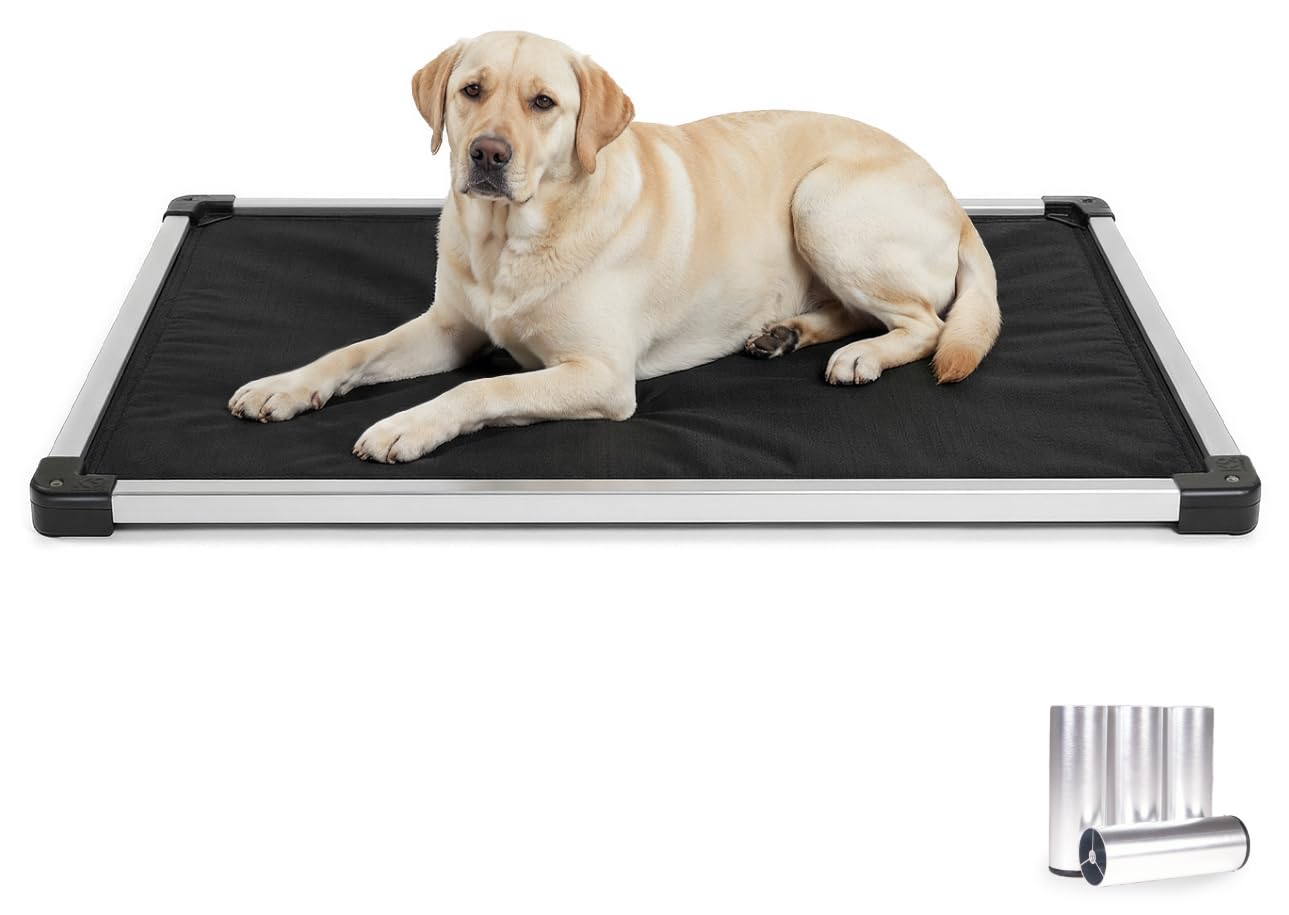
Large · Obsidian Black Ripstop
An aluminum perimeter shields the edge of a padded ripstop center, giving a persistent chewer less loose fabric to pick up. This Large variant has a 41 × 27-inch footprint and is designed around standard wire-crate dimensions. The center contains recycled polyester fiberfill; it is a padded sling, not a thick foam mattress.
Optional legs let the bed work as a raised surface, while using the padded model without legs preserves more headroom. The frame cannot compress into a narrower tray. For deeper cleaning, the center can be removed with a 4.5 mm hex key and washed cold, then dried on low heat. Inspect the fabric even though the manufacturer markets the Armored design as chew proof.
Pros
- Aluminum protects the fabric perimeter.
- Padded center can be used without raising the bed.
- Center can be removed for washing.
Cons
- Rigid dimensions restrict crate and doorway fit.
2. K9 Ballistics Tough Ripstop Crate Pad

XL · 47 × 29 in · Obsidian Black
This XL mat combines a 1200D ripstop ballistic exterior with recycled polyester fiberfill. Its approximately 1.5-inch profile gives a modest cushion without a large mattress. The 47 × 29-inch variant is intended for a nominal 48-inch wire crate, subject to the actual tray measurements.
The whole pad can be machine washed cold and tumble dried on low. Corner anchor points allow the supplied tie-downs to secure it to a suitable wire-crate floor. These features address shifting and everyday wear, not relentless biting: K9 Ballistics expressly limits this pad to light or mild chewers. Avoid folding an oversized pad into a smaller tray, where a raised edge becomes easier to grab.
Pros
- Lightweight, flexible construction.
- Entire pad is machine washable.
- Corner anchor points help limit shifting.
Cons
- Fabric and fiberfill remain accessible if the cover is torn.
3. K9 Ballistics Tough Ripstop Orthopedic Crate Bed

Large · 41 × 27 × 3 in · Obsidian Black
The Large orthopedic version provides a 3-inch foam mattress rather than the thin fiberfill cushion of the Tough pad. A ripstop outer cover, separate mattress protector and corner anchor points form the practical package. The removable cover makes regular laundering easier than washing a complete foam bed.
Use this model for a dog whose main bedding wear is digging, scratching or mild mouthing. The manufacturer does not recommend it for a heavy chewer, and foam becomes a swallowing risk if the cover opens. Compare the full 41 × 27-inch footprint with the tray and account for the mattress height. Wash removable components as directed; keep the foam core out of routine machine washing.
Pros
- Thicker cushion than a thin crate mat.
- Removable cover and separate protector.
- Corner anchor points for compatible wire crates.
Cons
- Unsuitable for a dog who repeatedly tears open foam beds.
4. Dogbed4less Ballistic Nylon Memory-Foam Bed

Large crate size · Seal Brown · 41 × 27 × 4 in
Dogbed4less pairs a 4-inch gel-infused memory-foam pad with a waterproof inner liner and a removable 1680D ballistic-nylon cover. This listing is the Seal Brown ballistic version, not a microsuede or denim cover from the same range. The 41 × 27-inch size is marketed for a nominal 42 × 28-inch crate.
The outer cover can be removed for cleaning; the inner waterproof cover has different care instructions and should be hand washed and air dried. This is a cushioning option for a dog who can leave a mattress intact, rather than a solution to determined chewing. The manufacturer’s warranty excludes misuse or abuse by a dog. Its 4-inch thickness also uses more standing room than a low mat.
Pros
- 4-inch memory-foam cushion.
- Separate inner liner and outer ballistic cover.
- Replaceable covers are available from the manufacturer.
Cons
- No metal edge protection; not a choice for persistent chewers.
5. K9 Ballistics Elevated Ripstop Cot
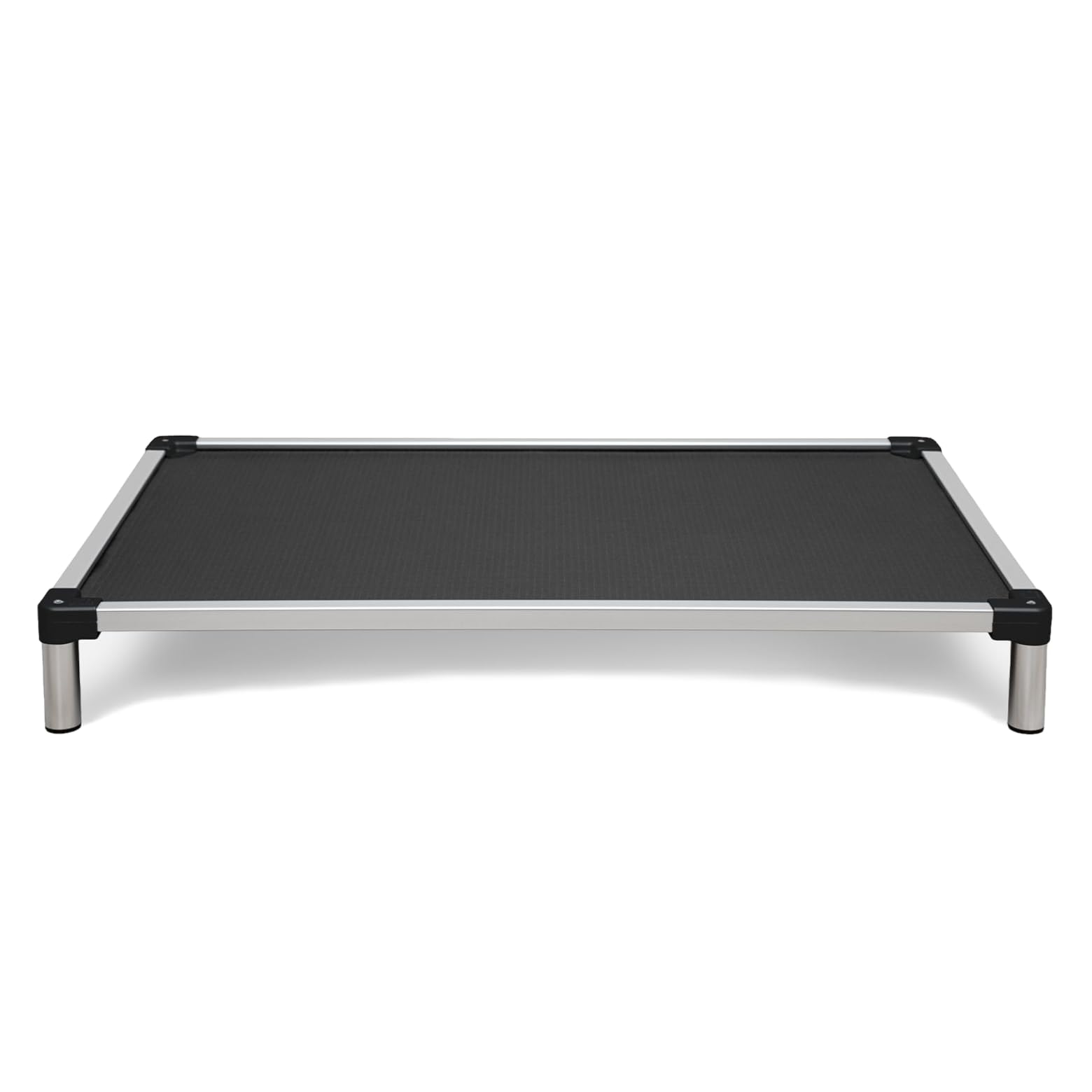
Large · 41 × 27 in · Obsidian Black
This unpadded cot stretches a ripstop sling inside an aluminum frame. It offers a different surface from the Armored Padded bed: there is no fiberfill cushion in the center, and support comes from fabric suspended above the floor. The Large variant has a 41 × 27-inch frame footprint.
The manufacturer requires the legs for proper support; taking them off does not turn it into an equivalent crate pad. Check the installed height and the space your dog needs above it, especially in a low crate. The surface can be wiped or hosed clean, avoiding bleach. Choose it for a dog comfortable stepping onto a firmer, raised surface, and inspect the sling for damage despite the protected edges.
Pros
- No loose foam or fiberfill in the sleeping panel.
- Aluminum protects the sling edges.
- Wipe-clean or hose-clean surface.
Cons
- The raised, unpadded surface will not suit every dog or crate.
6. Kuranda Aluminum Elevated Bed
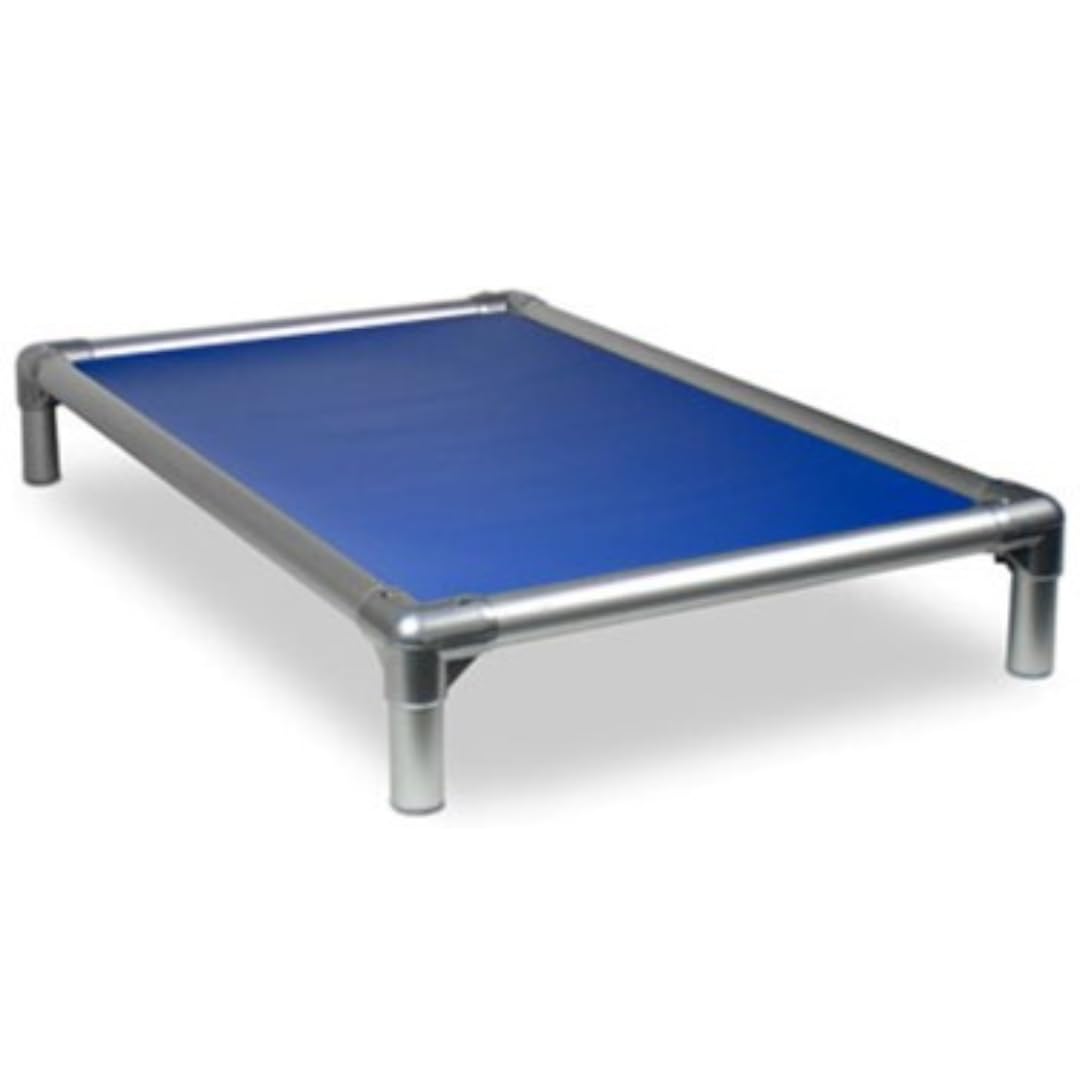
Large · 40 × 25 in · Heavy Duty Vinyl, Royal Blue
The Royal Blue heavy-duty-vinyl variant combines an aluminum frame with an unpadded, suspended panel. Kuranda rates its aluminum beds for up to 250 lb and supplies replacement fabrics and hardware. Soap-and-water cleaning makes the solid vinyl surface practical when easy wipe-down care matters.
This exact Amazon model is the standard elevated bed, not Kuranda’s separate short-leg Crate Bed or Slimline model. Treat it as a standalone resting option unless its complete assembled dimensions and height have been matched to your enclosure. Do not assume the 40 × 25-inch label establishes crate fit. Its firm surface and step-up height are meaningful trade-offs for dogs who prefer a thick cushion or have difficulty getting onto a cot.
Pros
- Aluminum frame with replaceable parts.
- Solid vinyl surface can be wiped or hosed clean.
- No mattress filling in the sleeping panel.
Cons
- Standard elevated configuration is not an automatic fit for a crate.
Why a dog that chews may need a different crate pad
A pad can make a hard crate floor more comfortable for resting. A good fit also helps avoid curled corners that your dog can catch with their teeth. Look at the resting surface and the edges together, especially if your last pad came apart at a seam.
Factors to consider when choosing a chew-resistant crate pad
Match the bed to the damage pattern
A dog who scratches briefly before sleeping needs a different response from one who repeatedly bites seams and eats the filling. Ripstop and ballistic fabrics can resist everyday abrasion without being suitable for persistent chewing. For a dog who works at exposed edges, a protected frame is the relevant design change; increasing foam thickness does not address that behavior.
Watch what happens during short, supervised use. A label or replacement guarantee cannot establish how your dog will behave with a particular surface. Stop using damaged bedding, and seek help when chewing accompanies distress or an attempt to escape.
Measure the floor, the opening and the standing room
Measure the actual tray or floor with the crate assembled. Rounded edges and raised lips reduce the space available, while the number on a crate box usually describes its nominal external size. A rigid frame needs an installation route as well as a large enough floor; check the doorway and any required diagonal entry.
Then account for height. A 4-inch mattress and an elevated cot both use room above the tray. Your dog must still be able to enter, turn and stand comfortably. A cot is a poor match if its height makes that impossible, even when its length and width fit. Do not improvise removing required legs from an unpadded sling bed.
How easy is it to clean?
Think about what a normal cleanup looks like at your house. A surface you can wipe down may be convenient after a muddy walk. A removable cover can help when the bedding needs a fuller wash.
Separate the cover, liner and filling
A washable outer cover, an inner waterproof liner and a foam core do different jobs. A strong outer fabric can still have vulnerable seams or a zipper. A liner helps protect the mattress from liquid, but is not a substitute for cleaning spills promptly. Avoid calling a complete bed waterproof solely because one layer has that description.
Choose care that you can repeat at home. The Tough pad washes as one unit; foam mattresses generally need their covers removed. The Armored Padded center requires disassembly for a thorough wash, while an unpadded cot can be wiped or hosed clean. Let components dry before putting the bed back into use.
Check where your dog can catch an edge
Before you order, measure the actual floor of the crate and look at the corners. A pad that’s too long can buckle up at the sides, while a small one can slide and expose an edge. Check how the pad will sit when the door opens and where the zipper or seams will land. That matters more if your dog tends to start chewing at a corner.
Think about your dog’s usual resting position, too. If they stretch across the crate floor, use the whole usable surface in your measurement. If they prefer a low entry, check the step from the threshold onto the pad. You can use a folded towel outside the crate to mock up the height while you measure, then take it away before introducing the actual bed.
Introducing a new pad
Begin with the crate door open and your dog free to investigate. Reward calm use, watch for picking at corners and finish before the session becomes difficult. Supplied anchors can help with movement when used exactly as directed; they do not make chewing harmless. Our guide to a dog chewing crate bedding explains inspection, gradual introduction and when a different confinement plan is needed.
Common questions
Is any soft crate pad completely chew proof?
Do not assume so. Fabric, seams and padding can be damaged, and a manufacturer’s chew-proof label does not remove the need for inspection. The flexible mattresses here have clear limitations; even an armored bed should be removed if it exposes material that your dog can pull off or swallow.
Should every dog have a thick mattress in the crate?
The right resting surface depends on the dog, the enclosure and the ability to use bedding safely. More thickness reduces standing room and does not establish better fit. If pain, mobility problems or repeated ingestion are concerns, ask your veterinarian for a suitable resting arrangement rather than relying on an “orthopedic” product name.
Can a stronger pad solve chewing when a dog is left alone?
A different construction can reduce access to fabric edges, but it cannot explain or treat the behavior. Look at the circumstances and avoid repeatedly leaving a distressed dog to damage bedding. A veterinary or qualified behavior assessment may be more useful than a succession of tougher beds.